Showing posts with label Cycling. Show all posts

Monday, October 18, 2010

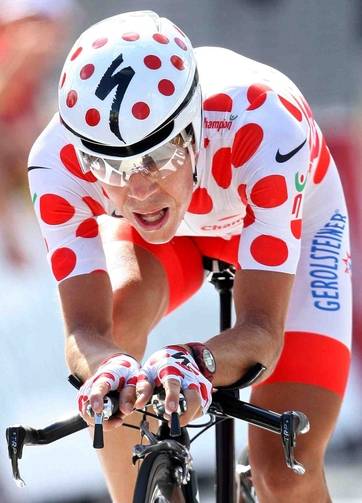
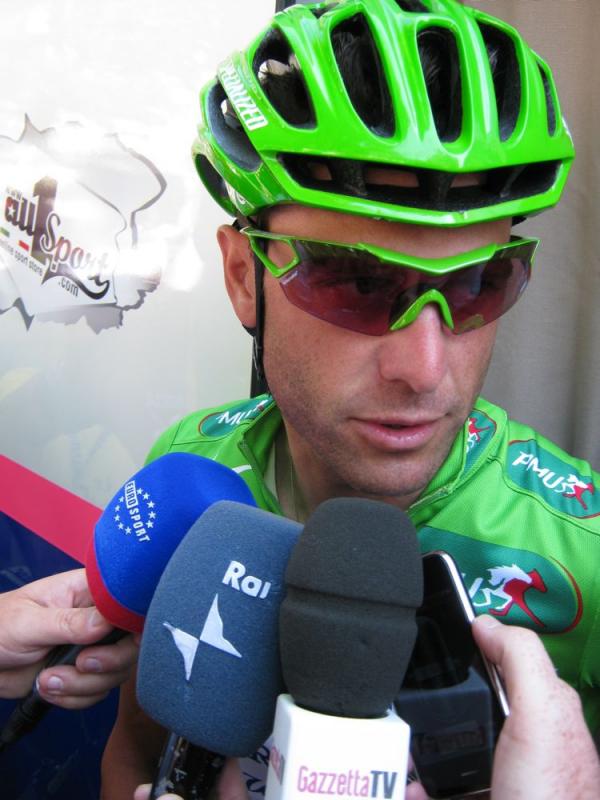
Alessandro Petacchi


Ale-Jet won't be attending the 2011 Tour de France route presentation. OK. That's understandable given the witch-hunt-like environment that's enveloped professional cycling and is making it impossible for riders even casually suggested to potentially be possibly connected to a situation tangentially related to doping to move about publicly without being subjected to sometimes-humiliating treatment at the hands of the "authorities" AND the fans. It's a shame, nevertheless, and is a discouraging example of how stakeholders in cycling have become experts at cutting off their noses to spite their own faces.

The idea that there can't be a middle ground between the kind of unquestioning support and blind loyalty demanded by an accused-doper like Lance Armstrong, and the savage abuse that is still heaped upon a convicted-doper like Riccardo Ricco is downright silly. When did professional cycling become an environment in which it was believed that corruption could not - would not - exist in a similar proportion to that which is found in business, politics, or even other sports? How is it that seemingly otherwise-rational, university-educated, wealthy, sophisticated fans lose all perspective when it comes to doping in cycling and take such great personal offense when it's revealed that the athlete who they idolized, lionized, dreamt about and even imitated (by shelling-out $200USD for a pair of team-issue bibs, jersey, gloves, socks and cotton cap) is doping in an effort to ride faster, often in the hope of making more money?

Of course it's disappointing, annoying, offensive, even, when our heroes are revealed to be mere mortal men, with the same little foibles as the rest of us. And yes, we're right to react with anger and cynicism when another positive anti-doping control is announced (or two, in the case of the Costa Brothers). And of course doping in sport must be fought aggressively. But who's to tell me that I can't celebrate Alessandro Petacchi as a rider and respect his palmares, even as I lament the possibility that his career may be terminated as a result of his own greed, stupidity, foolishness, etc.?

Sunday, October 17, 2010

Question from the Readers

How are you getting through the winter?

As for how I'm getting through the winter in general w/ respect to cycling...

I was just ruminating about this yesterday! I can't believe how crazy we were as juniors, willing to go ride five hours in the snow no problem. Now if it's below 60F I have to play mind games to force myself out there!

I live in Pittsburgh, PA, USA and winters here are quite unpleasant for the cyclist - they're cold, grey, windy, and there's often freezing rain instead of snow. We get almost no sun and the cycling community here is almost non-existent to begin with in comparison to a place like Southern California, where the Montrose Ride attracts hundreds of participants every Saturday. Credit though to the local ACA for organizing an ongoing series of local races for almost four decades.

When I was racing full-time I always went somewhere warm during the winter - two years in a row I lived in Uruguay, which was "the bomb," as they used to say, and then my last two years (05, 06) I lived in Altadena, California.

So to survive from now til late-January, when I'm either going to be reborn or ... I don't want to think what the other option is ... I'd like to get an MTB and try to rediscover my love of the trails. I hope to go back to working out in a gym, snowboarding at least once per week and, like others, staying active online in the virtual cycling world, writing about cycling topics, supporting the anti-doping movement, testifying when necessary, and definitely trying to stay in positive spirits.

I notice more now the importance of community, and that's why websites like cyclingtorrents.nl are great - they foster a shared sense of commonality and inclusion amongst people who enjoy an esoteric sport that's not well-supported in certain parts of the world (especially where I reside!).

I do have a standing invite to travel to the San Diego area that I still hope to take advantage of. I'd like to see Moab and the Slick Rock (I've never been), too. For now I'd settle for just getting over being sick!

Friday, October 08, 2010

In Defence of Kohl and Torri

The bloggeristi seem to have suffered a massive and inexplicable panties-jam after Bernie Kohl’s address at the U.S. Anti-Doping Agency’s symposium earlier this week.

Michael Creed furiously asks how Kohl could assert that it’s impossible to win the Tour without performance enhancing drugs (PEDs.) Well, Kohl placed third a couple years ago and was part of the “program” for many years. Unlike Creed, he was a genuine competitor for a grand tour podium and would probably know something about the requirements to get there.

As for it being “impossible” to win a grand tour without PEDs, I think it might be time to review a couple simple facts:
  1. Nearly every podium position in the last 15+ years at the Tour has attracted at least some suspicion of PED drug use, if not earning a clear violation and indictment.
  2. While they’re part of the pro peloton, you never hear contenders accusing other contenders of cheating. Think about what that implies.
  3. Andy Schleck has repeatedly and vocally offered his sincerest hope that Alberto is cleared of recent allegations. My guess is that’s not only because they’re such good friends.
Kohl’s assertion that most podium finishers are doping, combined with Ettori Torri’s recent (and somewhat hyperbolic) statement that “all cyclists dope” are worth considering for the simple fact that neither man bears anything to gain. Kohl’s assertion that he has no interest in returning to the peloton is sad but understandable. It also frees him to free his conscience without fear of losing all future prospects. Torri has gone beyond anything uttered by the hysterical Dick Pound, the current WADA leadership, or any other control agency (notably the USADA.)

So, good on both of ‘em.

Back to the ranting Creed (after all, is not a screed but a "ranting piece of writing"?)… He seems to claim (it’s tough to parse everything on his blog) that Bernie Kohl gave him a jersey many years ago that had some pills in it, and that they were probably “ephdrea” (sic.) So? Maybe they were Vitamin C. Or estrogen pills. Or heroin. Or chalk.

Love ‘em or hate ‘em, I applaud everyone who’s had the courage to publicly shine a light into the darkness. Keep it coming, boys!

Clenbuterol and the Tour de France

When news of Contador's positive for clenbuterol initially broke, I expressed my surprise and dismay, and also incredulity that the Spaniard would dope with clen during the Tour de France. I accepted that there could be validity to his claim of food contamination, but refrained from suggesting a second possible scenario, the introduction of clenbuterol into his body via a contaminated transfusion. I stick by my initial statement that clenbuterol is a horrible drug and one that you would never use during the Tour - but I want to reiterate that I accept it's absolutely plausible that an athlete would dope with clen while not racing in hopes of slimming down to unnatural levels before a major competition - though in that case clen is only one of several substances that would have to be combined in a veritable weight-loss cocktail (thyroid hormone being one, and perhaps a sleep-aid like Stilnox being another).

I still don't believe that Contador doped with clenbuterol during the Tour de France, and I hope that he can answer the five questions we previously identified here, and explain satisfactorily how the drug entered his body. Unfortunately, that seems less-likely now with this allegation coming from an unnamed source close to the Astana team, as reported by VeloNation:

"Belgian magazine Humo has published claims from an individual with the Astana team, who alleges that Alberto Contador used Clenbuterol after the Criterium du Dauphiné as part of a weight-loss treatment. The person, who spoke on condition of anonymity, claims that the Spaniard had blood extracted between that race and the Tour when, crucially, traces of the banned product were still in his system.

“He had a transfusion performance after the Dauphiné Libéré [Criterium du Dauphiné], and the blood still contained a little bit of clenbuterol from a just-finished slimming treatment,” Humo reported the insider as saying.

“In the Dauphiné Libéré, Contador was still a little overweight. Ordinary people do not see that, but there was still a pound or two to shed. Clenbuterol is used to get rid of the last kilos while, at the same time, to ensure that you do not lose muscle mass - or, in the best case, even gain a little extra muscle mass.”

He described how the technique works, saying that the substance is used in combination with another
“You have to use it in combination with T3 [Triiodothyronine]. This is a thyroid hormone that helps in the digestion of fats. Then you have more rapid effect with a smaller dose of Clen. And the smaller the dose, the smaller the chance that you get caught.”

Contador finished second overall in the Dauphiné, but appeared to be below his usual strength there. He was beaten by an impressive Janez Brajkovic (Team RadioShack), who finished 1’41 ahead at the end of the event. Contador was only sixth behind Brajkovic in the time trial and was unable to drop his rival on the crucial stage to Alpe d’Huez, although he won the sprint to the line..."

And as an aside, in the same report the anonymous source claimed that doping via transfusions continues as before, much like Bernhard Kohl alleged, when he said it was not possible to win the Tour de France if doping was still endemic. VeloNation continues:

"The biological passport is being used as a deterrent to prevent riders from doping. While it has made it more difficult to beat the system, the Astana source told the magazine that some riders continue to manipulate things at a lesser level.

“Of course,” he said, when asked if transfusions continue. “But it’s in small doses of 150cc. Previously, riders during the Tour used two, three big bags of blood, from 400 to 500 cc. Now they cannot afford to, because of the biological passport and the sudden fluctuations in blood levels that occur.”

Sigh. I love this sport, I really do, and I'm sorry for my role in perpetuating the doping problem, but darn, if it's proven that Contador doped (and by proven, I mean there's a CAS ruling that closes the door on any appeals), then maybe that will be the nail in the coffin that will get me out of this trance and help me see the world through lenses other than a cyclist's Oakleys.

Reactions to the Ever-Evolving Landis Time-line

A "Great Thinker" from the world outside of cycling contacted Pappillon with a counterpoint to the vitriol surrounding Floyd Landis, and we've chosen to publish it here. Not everyone, it would seem, chooses to see the man in an irrevocably-evil light.


"I don’t understand the ignorance or the vitriol surrounding Floyd. If you think he would care at all what some anonymous schmuck in Nevada City thinks of his public-facing time-line, here’s how my mind worked through it:

1) Interesting background. I love it when strange people from strange circumstances rise to the top.

2) Public tiffs with Lance at Postal. Nice.

3) 2006 Stage 17: One of the most heroic athletic feats of all time. I assume he’s juiced, but I assume everybody else is juiced, too.

4) Denies everything after getting popped. Bummer. My respect went down, but I also knew that was part of the game.

5) Promotes his defense fund and takes heaps of public contributions. I don’t give because I don’t think he’s innocent (not necessarily of the Stage 17 Testosterone, but just in general.) Actually, I don’t give anything to anybody or any organization. I give the government enough taxes as it is.

6) WSJ interview earlier this year and attendant proclamations of guilt: AWESOME. My respect goes back up.

7) Determination last week to reimburse all the poor fools who contributed to his fund. Floyd’s integrity is now completely restored in my book. I probably still won’t send him any money, but he can crash at my pad next time he races in Nevada City, if he wants to."

Blazin' Saddles: The real McCoy? - The LOST Paragraphs

"What was he, a Master of the Universe, doing down here on the floor, reduced to ransacking his brain for white lies to circumvent the sweet logic of his wife?"

Such is the predicament of millionaire bond trader Sherman McCoy, a self-styled Master of the Universe, in the opening chapter of Tom Wolfe's Bonfire of the Vanities, a satire on the decaying class, racial and political structure of New York in the 1980s.

In the light of recent developments, you could seemingly replace Alberto Contador for the adulterous McCoy, the doping laboratories and baying media for his wife, while the thing that's decaying is the core of professional cycling and its organisational bodies. As for the white lies, well, they remain white lies - if you believe all the rumours.

Cycling has been riddled with mendacity in recent years. In any walks of life, those in the wrong more often than not don't actually believe they are doing anything bad in the first place. Certainly not in relation to their immediate surroundings. Take Sherman McCoy, for instance. As a Master of the Universe, he is entitled to do as he pleases – especially given the temptations around him.

"Technically, he had been unfaithful to his wife. Well, sure … but who could remain monogamous with this, this, this tidal wave of concupiscence rolling across the world? Christ almighty! A Master of the Universe couldn't be a saint, after all … It was unavoidable. For Christ's sake, you can't dodge snowflakes, and this was a blizzard! He had merely been caught at it, that was all. It meant nothing. It had no moral dimension."

Most would agree that there has been over the years a tidal wave of transgression rolling across a peloton lacking a certain moral dimension. Doping is unavoidable, many say. What's more, it's not a sin as long as you don't get caught.

The minds of many top cyclists snared for their indiscretions appear to mirror that of Wolfe's banker, who sees himself incorrigible, on a different level both ethically (his extra-marital affair) and legally (he mows down and leaves a young boy for dead in the Bronx).

The Contador "situation" means all of the winners of the previous 15 Tours de France – with the exception of Carlos Sastre – have now been associated with (or accused of) doping, have admitted doping or, in one case, have been stripped of their title for doping.

It gets worse. Only this week, convicted doper Bernhard Kohl told an anti-doping symposium in Colorado that it was "impossible to win the Tour de France without doping". The best riders, he inferred, cannot be saints.

It gets even worse: former rider Roy Sentjens, who retired this year after testing positive for EPO, said it was not even possible to reach the Tour top ten without doping (quite how one of his former Lotto team-mates - a staunch anti-doper who finished runner-up on two occasions while the Dutchman was on his squad - feels about this is anyone's guess).

It gets worse still: this week, a 78-year-old Italian anti-doping prosecutor claimed that all professional riders - with no exception - take banned substances.

Such a generalisation is as dangerous as it is patently incorrect (much like the notion that all bankers are b------s) and yet the sad thing is that it may not be as far from the truth as we previously thought.

But let's forget the final outlandish statement and accept, hypothetically, that the first two assertions are true (Saddles isn't going to question the credibility of Kohl and Sentjens in this blog because he'll be here till the Basque cows come home for their daily dose of clenbuterol).

Say they're true, that you can't win or even make the top ten without doping, and you can begin to comprehend why someone like Floyd Landis was so determined to clear his name back in 2006 - or why, for that matter, Contador feels so aggrieved now.

Sure, Landis knew he had doped, but he may have had good reason to believe that those standing either side of him on the podium had done the same. He was clearly adamant (or at least, says he was) that a certain former team-mate had won seven consecutive races using similar preparations.

Landis, like the fictional McCoy and the real-life top bankers who brought the world's financial institutions to a halt with their arrogance and misplaced aura of invincibility, believed himself to be a Master of the Universe. And Masters of the Universe can't be saints.

Sticking to the world of banking, take the example of French rogue trader Jerome Kerviel, who on Tuesday was given a three-year jail term and ordered to pay back the 4.9 billion euros he lost his bank Societe Generale.

Kerviel was no Master of the Universe - he was a mere domestique of the banking world in comparison to Grand Tour contender McCoy; more of a Sentjens than a Landis, if you will.

The trader's lawyer said his client would appeal the "totally unreasonable and unbelievable" judgement. "Kerviel is disgusted," he said, stressing that the court had judged that the bank "was responsible for nothing, not responsible for the creature that it had created."

This is a similar defence made by convicted dopers: they are not to blame, but cycling and its inherent doping culture is. "I have the feeling Jerome Kerviel is paying for an entire system," the lawyer added - something the lawyers of Landis, Ricco, Kohl, any convicted doper could all say.

For once they're caught, dopers are hung out to dry like a piece of beef biltong. And in the cycling food chain, the knives can turn on anyone - even the most cocksure of predators, the Masters of the Universe themselves.

The question we now have to ask is whether Contador is a real McCoy – or if he is a bona fide victim of the freak contamination he claims to be.

Let's look at the evidence. Last week Saddles suggested that Contador's tainted meat excuse was so unfeasible it must have been true; this week, BS would say it seems simply unfeasible.

Many readers gave Saddles beef for overlooking the then latest development in the case - namely that Contador has received a blood transfusion which left plasticizers in his blood as well as clenbuterol - but the blog was written before that angle had been broken in the German press.

At the time, Saddles believed he was in the right in stressing the episode contained more hot air than a cattle farm - but given how things have panned out, BS admits he was perhaps too hasty in coming to Bertie's defence.

While it's natural to presume everyone innocent until proven guilty this whole affair has proved that in cycling the opposite rules must apply: everyone is guilty until proven innocent. And that is a sorry predicament. [What follow are the lost paragraphs.]

The contaminated meat line is now beginning to look almost as much of a chimera as the guff about Tyler Hamilton's unborn twin. The Astana chef's initial line that the beef came from Pau is contradicted by Contador's claim that it was brought for him across the border in Irun by the organiser of the Vuelta a Castilla y Leon (a race the Spaniard has won on three of the previous four occasions).

That doesn't even answer the question as to why Contador was eating beef on the rest day in the first place (a practice not usually done in big races). Presumably, the next line will be that the meat was wrapped in cling film made from the same type of plastics found in blood bags. Or that it was accompanied by a plate of boil-in-the-bag rice.

Put simply, today's youth would dismiss the beef excuse is one big epic fail. Saddles wouldn't go so far, but he might suggest that it was a slight red herring.

Contador has known since 24 August that he failed this doping test - and this is the best he can come up with. In the six weeks that passed before the story broke, why had he not traced down where the beef came from, whereby sorting out his defence? And if, as Contador stated, the UCI had assured him it was a case of food contamination - why had the cycling body not further investigated the matter?

The answer, perhaps, is that the story wasn't meant to break. Contador may have been told he should keep quiet about the whole thing - probably to save the flagging reputation of the sport. When the story was reported, both he and the UCI were perhaps caught unawares and with their pants down. Now that would be a decaying structure.

Since being caught in the headlights, Contador has been both contrite (crying into the cameras) and bullish (denying any wrongdoing with all the arrogance of a Master of the Universe).

Pulling the strings, the rider has said he will say no more about the case and has even threatened retirement if a positive resolution is not made within 10 days.

His ex directeur sportif has issued a staunch statement of defence - something he tellingly failed to do when his own rider, Fuyu Li, blamed contaminated meat for a positive test for clenbuterol six months ago.

Contador's principle rival over the French roads in July also came to his sudden defence on Twitter, stressing how he was shocked about the "crazy" news and how he hoped Contador was innocent and would be given the right to defend himself.

Sadly, Blazin' Saddles has it on very good authority - from blood doping specialists with inside information on the biological passports of cycling's top riders who echo the sentiments of Kohl and Sentjens - that the Contador conundrum could well be just the tip of the iceberg.

But given that so much was seemingly done (for whatever reason) to keep the Spaniard's positive under wraps, it's unlikely we'll ever see what is lurking under the surface.

Just pause and think, though. What development would be the worst case scenario for the UCI, the Tour, cycling in general should Alberto Contador be stripped of his title and the yellow jersey awarded to the runner-up who matched his every move but for a slip of a chain?

Towards the end of the Bonfire of the Vanities, Wolfe's narrator asks: "Who but an arrogant fool would want to be a Master of the Universe - and take the insane chances he had been taking? […] The Master of the Universe was cheap, and he was rotten, and he was a liar."

Let's just hope these similarities with Wolfe's work are all just a coincidence.

Ever since he was bullied by his brothers into watching the Tour de France as an eight-year-old, Blazin' Saddles has been a cycling fanatic. As persistent as Voigt, as fast as Abdoujaparov, as voracious as Ullrich and as accurate as a Festina watch, Blazin' Saddles offers a lighter take on the oft-grave world of professional cycling. The self-styled best cycling-blog pedlar in the business, BS refutes sullied claims of doping levelled by his rivals: these nuggets are powered on Gerolsteiner fizzy water alone. Just ask BS's friend Bernhard Kohl for a reference. An edited version of this post originally appeared at Yahoo! Eurosport.

My Tale from the Peloton - ghost-written excerpts

"I pulled the needle out of my gluteal muscle and said out loud, “Never again.” My cat turned his gaze towards me and stared. “What?” Even the damn cat knew I was lying to myself. I caught myself in the mirror across the room but I no longer felt shame looking into my own eyes. Sometimes I felt dirty and guilty, other times I felt completely justified and righteous. Mostly these days I didn’t feel anything at all; it was just a job and I was a professional. I tested the tip of the needle against my index finger and immediately remembered a syringe I had seen balanced on a hub cap next to the road to Modena. Who would leave their needle out like that? Some drug addict, probably. I caught myself in the mirror again. 'Like you. Fuck.'"

“It was clearly a rental car and it had followed me for exactly four turns. I tried to do a quick calculus; what were the odds that someone visiting this part of town would make those exact four turns? I wished it were daytime so I could get an idea for who was behind the wheel. What they didn’t know was that I had a full clip of equalizing force tucked away in the glove box. I knew something about level playing fields whether it was within the law or not. I’ve never minded losing but only if it was an even fight. In its own way, the honor of thieves is purer than one enforced from an external authority.

I realized I’d gotten lost in another Socratic dialogue with myself (never knowing which speaker was the real me) and had forgotten about my pursuers. I looked in the mirror but didn’t see anyone. My neck started throbbing and I realized how tense I’d been. I turned my head from side to side to get the blood flowing and pulled up to my family’s house. The rental car was parked across the street…”

Thursday, October 07, 2010

Pro Wanker Interview

The title alone makes it an interesting read.

"In the mind of the public, doping is a dirty thing. We assign blame, claim righteous indignation and experience a visceral rejection to the cheating of our idols. So when our stars start to fall, we find pleasure in accelerating their descent.

Meanwhile, to the developing world―where conditions promote doping and ethical muddles―we show indifference. Viewing cycling, the sporting public sees doping as a test of morals rather than economic necessity.

And every year, another rider from a disadvantaged background emerges and shocks the world with his performance. For weeks, we are stunned by the talent. In the underdog, we have found a new idol..."

Click here for the complete, exclusive interview. 

Tuesday, October 05, 2010

Bernhard Kohl is Not the Enemy of Cyclesport

There’s no reason to force yourself to reject, or otherwise adopt a guarded position in response to Bernhard Kohl's appearance at an anti-doping symposium this past weekend in the United States, unless you're on the wrong-side of the doping dilemma. Of course when someone says “everyone is doing X” or “it’s impossible for anyone to do Y,” we know intuitively that there is a degree of hyperbole involved and that there is always an exception (in reasonable circumstances – and I less and less think it reasonable to say with 100% confidence, “You could win the Tour without drugs during the 1999-2010 period.”).

Maybe you could finish the Tour, but it seems unlikely anymore, especially in light of recent revelations and goings-on, that you could win it. Maybe (qualifier) that’s just how it is, and maybe it’s high-time that such statements not be automatically qualified by others who find it offensive to their worldview to consider how corrupt a sport might be. I mean, does Kohl really need to preface what he says with, “I accept the fact that what I’m going to say could be invalidated by a statistical anomaly and that there might always be a physiological freak who is an exception to what I know to be true from first-hand experience and anecdotal evidence, BUT …[you can’t win the Tour w/o doping.]”??

And just to clarify, it was Roy Sentjens who said that you couldn't finish in the top-10 without doping, not Bernhard Kohl. 

Sunday, September 12, 2010

Photos - For the People, By the People

My friend writes, "I love cycling photography, but its scope tends to be a bit narrow: pro racers riding fast on bikes; heroic suffering; the peloton gliding through beautiful scenery - and so on. But that's not what cycling is like for most ordinary cyclists - it's far more modest than that. It's about chatting in cafes, repairing punctures by the side of the road, cleaning your bike, drying your wet shoes on the radiator, waiting to start a time trial on a cold March morning, falling into a grass verge, finishing in the peloton in a cat 3 race, milling about bike shops, commuting to work, hacking through the woods on your mountain bike while a bit drunk, the club dinner dance, marshalling the club road race, putting on numbers for the first time, learning to ride with cleats - and so on and so on. It's all these small things we associate with riding that collectively make up cycling culture for the majority of us. That's what I want to capture."

If you're interested in contributing to the effort, go here: http://thefixedfactor.wordpress.com/2010/09/10/bike-life-vol-1-2/.

Saturday, September 04, 2010

(Almost) Blood on the Road

Yesterday, Friday, September 3, 2010, I came within what seemed like only inches of disaster. Reflecting now upon what happened then, while I peck-out these lines with a solitary index finger, I realize that there is no identifiable scale that can measure the luck of my escape and the magnitude of the disaster that would have befallen me. As it is, I'm typing this with only one hand, but feel as lucky as a leprechaun to suffer this relatively minor inconvenience. Several years ago, the Churchill Insurance Company determined that approximately one-third of auto accidents happen within one mile of home and a further third within five miles. Churchill's report revealed that "drivers experienced a 'switching off' syndrome on familiar roads which is a common cause of car accidents."

Knocking on wood (before typing this sentence, since again, I've only got the use of my right hand/arm), I've never crashed a car on the open road as a result of carelessness or imprudence. Admittedly, a collision with a deer on I-84 in New York at over 100kph saw me total a Chevy estate car (fancy term for station wagon), and I was hit from behind while stopped at an intersection by a distracted school girl who was regaling her passenger with tales of the latest lunch room intrigues. I even wrote-off a Porsche 993 Turbo at the Nürburgring while running during a closed-session. But I've never "had an accident" as we say here in America. However - before yesterday, I'd been hit three times by cars while riding my bicycle. And yesterday saw number four. And only 1.8 miles from my house.

I'm here today to type-up this blog post, so it couldn't have been that bad, you say. Well, it wasn't (though put that down to sheer luck), though it could have been (and there would have been nothing I could have done about it, except not be on that stretch of rode at that time in the first place). An old lady, who lives a little more than half a mile further down Route 88 than my turn-off, was heading home yesterday at the same time I was finishing a rain-shortened training ride. Though it was dry at the time, and I was on a wide-open stretch of road, riding at approximately 30kph on top of the white line that marks the boundary of the road and the shoulder, the hapless senior citizen in a Chevy passed me like she didn't even see me. And apparently she didn't, commenting afterward that she thought the terrific "THWACK!" she heard came from something in the road that she'd run over. Close...

I'm guessing that her car didn't have breakaway mirrors, because when she smashed my left elbow with her passenger side mirror while she was careening-along at a good 65kph, it was my arm that buckled, and not her car. It's true what they say that things happen so quickly that you don't even realize it, at the same time your life passes before your eyes.

I heard the sound of the impact before I felt it, and what little there was to feel was quickly smothered with a terrifying numbness - my left arm just stopped "feeling." If you'll allow me to indulge myself with a spot of self-praise, I sit like a natural on the bike, and am as relaxed as a cougar perched on the tops of my bars (lol). And this probably saved my life yesterday!

By all rights, I should be dead. The impact should have wrenched my bars around, knocked my front wheel from under me, sent me tumbling into the lane of traffic and deposited me in the path of the next vehicle such that my head was in prime position to be squashed in a residual car vs. "biker" incident. In all honesty, though, I didn't even bobble. That's not to say that our Blind Betty barely grazed me. By her own admission she hit me so hard that the report left her thinking she'd come into contact with something in the road (which, technically, she did). Rather, my default position on the bike is "relaxed," and I was lucky that the impact merely deadened my arm, before almost ripping it off my shoulder. In that horrifying split-second from when a crash begins to unfold, to when you actually become aware of it, I saw my left hand flying off the bars and wondered where it was off to in such a hurry! Next I was wondering why my torso almost collapsed when I tried to re-weight my left arm after regaining the brake hood, and soon I was marveling at how straight a line she held after passing me so closely that she could hit me with her wing mirror, but not her bumper, or miss me altogether.

What was disconcerting was not the horrible pain that flooded my elbow shortly after the collision. Rather, it was the nonchalance with which the driver continued down the road, and her utter incomprehension when I caught her at the next stoplight (about a mile down the road) and advised her that she'd just hit me, and that I wanted to obtain her insurance information, if she would be so kind. She didn't deny it - after all, she said she'd heard something, but just assumed it had been "in the road" (God forbid Fido had been playing in the street, or a herd of deer crossing the road - Granny wouldn't have even noticed as she ploughed into them all). She simply couldn't comprehend what she'd done.

A gouge in the passenger's side mirror housing and paint smeared with my hair and skin testified to the coming-together of man and machine in a way that Chris Boardman would never have approved of.

While now more than ever I believe that senior citizens should face mandatory retesting in order to retain their driving privileges, at least this one didn't make things worse by being rude about what she'd done, or claiming that I shouldn't have been on the road to begin with. And in turn, I managed to keep my mouth shut and choked-down the myriad negative emotions that threatened to ooze-out of my jaded-by-one-too-many-brushes-with-asshole-motorist pores.

I've got to wrap this up, as there are other things to attend to, and I've already seen 24 hours of productivity lost to the mother of all aching elbows, but I wanted to share this story with you. Not because there is some profound moral to the tale, or in an attempt to shamelessly leverage my own near-death experience to demand the building of bike paths or mandatory helmet laws. It's just a reminder that riding a bike in traffic is an inherently dangerous proposition, and not usually because you aren't a skilled athlete, but rather as a result of motorists who either don't think you should be there, or aren't even aware that you are.

I'll try to be less disdainful when loved ones implore me to "be careful out there" when I push-off for my next ride, when my elbow stops hurting and feeling returns to my hand.

Tuesday, August 31, 2010

UPDATED: Laurent Fignon is Dead

Laurent Fignon, twice winner of the Tour de France and runner-up in the race's greatest edition in 1989, is dead. He succumbed to cancer at the age of 50 today in Paris, France.

"I don't want to die at 50 but if my cancer is incurable, what can I do?," he lamented to Paris-Match magazine in January.

Fignon, a Parisian known in the peloton as "The Professor" for his bespectacled appearance, won the Tour in 1983 and 1984, the Giro d'Italia in 1989 and Milan-San Remo twice, in 1988 and 1989.


Considered to be one of the best riders of the 80's, Fignon could also count in his palmares victories in two editions of the Critérium International, the GP des Nations, and Flèche Wallonne; he was the 1984 French professional champion.

But 1989 was his most memorable season.

Despite fighting a see-saw battle with Greg LeMond during the '89 Tour, and swapping the race leader's yellow jersey four times, Fignon could not best the American. He started the final stage - a 25km individual time trial - with a 50-second lead, but would be pipped by eight seconds in the end, the closest margin ever.

As Fignon raced down The Avenue des Champs-Élysées and headed towards the finish of the race, British commentator Phil Ligget exclaimed, "Fignon is bouncing off the barriers! He's lost the Tour de France!" (see 4:38 in the video included below) It was a watershed moment in cycling history, and one that clearly marked a transition between old and new.

While he configured a dual-disc set-up for his time trial bike, Fignon chose to race that day without the benefit of an aerodynamic helmet, or the newfangled clip-on handlebars for which his rival LeMond had opted.

And despite only a year's age difference between them, the pony-tailed Fignon seemed older and more fragile after crossing the line - a spent force - while LeMond's post-race joy and wonderment were popping.

In a book published in June 2009, "We Were Young and Carefree," Fignon revealed he had been diagnosed with cancer. He also admitted to having used doping products at various points throughout his career, but said he did not know if they had caused his illness.

"I love life, I love a good laugh, travel, books, good food. I'm a typical Frenchman. I'm not afraid of death, I just don't want to die."

After he retired, Fignon managed races including Paris-Nice before becoming a television consultant. He worked for France 2 television on the last Tour, despite a voice broken by his illness, and said at the end of the race that he would be back in 2011.

As Greg LeMond told me several years ago, "Fignon was a great competitor and he pushed me to push myself to do my best."

Aloof. Aristocratic. Ferocious. Fierce. In retirement - rejuvenated. Fignon may not have feared death, but he is, undoubtedly, gone too soon.


This report includes writing by Jean-Paul Couret and Editing by Clare Fallon (Reuters).


Notes: LeMond's effort was the fastest individual time trial for a distance longer than 10 km ever ridden in the Tour (54.545 km/h average speed). Fignon finished third in the final time trial, averaging 53.59 km/h (33.33 mph). Fignon’s Super-U teammate Thierry Marie took second on the stage, at 33 seconds.

UPDATE: On a day filled with tributes to Fignon, these words by LeMond stand out:

"It's a really sad day. I see him as one of the great riders who was hampered by injuries. He had a very, very big talent, much more than anyone recognized. For me he was one of the greater champions that was not recognized. He was more recognized for his loss in the Tour de France than for his two victories.”

“When he lost the Tour de France in 1989 it was one of the few victories where I felt we both won. The saddest thing for me is that for the rest of his career he said he won two Tours de France, when in reality we both could have won the race."

I apologize to those who thought it was a poor choice to feature video of Fignon actually losing a bike race - rather than winning. It was 1989 when I started cycling, however, and my first - and enduring - memory of Fignon was his epic battle with LeMond. If you have links to video clips of Fignon winning races, please feel free to leave them in the comments, and I'll add them to this main body of the post.

Sunday, August 22, 2010

The Return of Manolo Saiz - Venga!

Manolo Saiz is plotting his comeback to professional cycling, according to Cyclingnews.com, and is supposedly organizing a top-level team for 2012. While Twitter and the forums are abuzz with outraged cycling fans who claim the Spaniard should somehow be refused the chance to return to the sport, I say "Venga."


There is so little money in cycling relative to the truly professional sports like the NFL, MLB and NBA - and so much instability and unpredictability - that it's incredibly short-sighted to reject Saiz based on his alleged-involvement in doping via Operación Puerto (remember, he was never convicted of anything - we must be accurate in describing the historical record). If he can secure the backing to fund a team that will employ 20-plus riders and at least that many staff, if not double, then he should be welcomed with open arms and a stern warning - or at least a reminder. Doping has been criminalized in Spain now, so Saiz wouldn't be able to escape sanction were he proved to be involved in systematic doping at the level of the team. And his riders would be controlled by the Biopassport, which adds a layer of dissuasion.

I support clean-cycling, no doubt, but at the same time, I support the right of the riders to earn a living. And unlike Formula 1, professional cycling simply cannot have too many (ProContinental) teams. If the squad offers a stable paycheck to both rider and staff alike, then in the absence of an active sanction or ban enforceable by the UCI, Manolo Saiz should be welcomed back to cycling and the positive economic impact of his efforts should be acknowledged, even while he is warned not to get up to any funny business.

Friday, August 20, 2010

UPDATED: Mike Creed on Doping and Sport

I believe that pro cyclist Mike Creed is saying something much more profound than what other commentators have attributed to him after his recent interview with Cyclingnews.com. That is, for him, and by extension, many of his colleagues, doping is not something that they view through a moral or ethical lens. And by extension, when someone tests positive, Creed is not interested in excoriating them for supposed moral-failings. Rather, he sees doping primarily as something to be avoided because of a fear of medical complications, and accepts the fact that his decision not to dope came not from any high-minded moral principles, but rather, simply from being scared.

Cyclingnews heavily edited the original interview to create that article, and Mike would have been better off just doing it with NY Velocity again, whereby they transcribe everything that's said.

Anyway, what's most noteworthy to me, and what I thought more people would pick-up on, was the reference to Creed's being benched for two months without explanation by Team Type 1 management. For those of you who follow Pappillon, you also know that Creed was wrongly accused of being a bitter insider leaking embarrassing details of the poor leadership within that organization that saw at least five staff members quit the team in frustration. Despite the fact that it was impossible for Creed to be the leaker, because I was in conversation with him on one line, and effectively receiving messages from the leaker on another, the team's mgmt won't even answer Mike's queries. I'm not entirely surprised by that, however, as my experiences interacting with Phil have seen him reply only when it was convenient and not when the rules of decorum suggested it.

Creed's not a doper and never has been, though he's got balls for trying to suggest we drop the fake moral outrage, so to speak. That didn't translate in the article, and he should have gone with a different format that would have allowed us to read Creed's comments Verbatim (he's an engaging interview, for sure, and a funny guy to be around). But regardless, being honest about how the peloton has not - in general - viewed doping as a moral problem and still doesn't (although some PC riders are too scared to admit that right now, so they tow the line and call for the application of the death penalty for cases of doping) shouldn't be reason for him to be shunned by his employer.

UPDATE: Thanks to a different Mike for both the friendly, encouraging comment, and a reminder to highlight Mike Creed's home-made aero helmet! WTF?! Someone ask him (MC) what the heck's up with that!?! Nothing like slummin' it in the ghetto on a team that claims to intend to ride the Giro, but which can't manage staff (or talent) any better than your local Masters/Cat.3/Wednesday-Night-World's team, allegedly.


If you're trying to think of a gift for your favorite future-euro-team-pres., consider getting him and his colleagues copies of "The Etiquette Advantage in Business - Personal Skills for Professional Success" (suggest chapters, "Executive Etiquette" and "The Written Word" - especially the part about communicating electronically, sending email - always respond, keep it short, don't get emotional).

Tuesday, August 17, 2010

UPDATED: Can We Drop the Fake Moral Outrage?

I'm all for clean sport b/c I've come to understand from first-hand experience how destructive doping can be...but: are you or is anybody else REALLY surprised that guys like Jan Ullrich and Tyler Hamilton, both of whom were Olympic gold medalists, are reticent and inclined not to publicly admit their doping, even when it's apparently obvious to even the casual fan?

I mean, seriously - how upset or annoyed or frustrated or otherwise negatively impacted can you be by their totally-predictable decisions to deny having doped, or at least refuse to address affirmatively those accusations (even if in the long-run they might be better off b/c of the potential lifting of the mental burden of living lives based on lies)?

The likely outcome of such admissions would be total financial ruin, years of litigation, an exponential increase in harassment and persecution by the media and the loss of all public support, and in some cases possible criminal liability.

It's disingenuous for anyone to act surprised or offended or to be condescending or dismissive b/c Ulle won't admit to allegedly having been a Fuentes client - just like Hamilton won't admit to having allegedly blood doped during the Olympics and so holds onto his Gold Medal.

I have little doubt that the same people who urge Ullrich to come clean for his own well-being and for the long-term health of the sport are the same people who would jump at the chance to crucify the guy after he would make such an admission!

I'm sorry, but unless Ullrich loses "everything" and reaches the level at which Floyd was bobbing when he decided to engage the UCI behind-the-scenes to challenge them for their complicity in doping, it's totally not going to happen that he admits to anything while he still faces civil or criminal liability, and it doesn't take a rocket scientist or a PhD to realize that.

I don't mean to single-out anyone in particular, but can we drop the fake moral outrage and admit that we can, by and large, empathize with former-athletes like Hamilton and Ullrich who are widely suspected of having doped, and who have been sanctioned to one degree or another for doping infractions, but steadfastly refuse to acknowledge their alleged doping? And that we realize that it's unlikely that they would step-up and make such admissions prior to the expiration of any statutes of limitations, or their own arrival at rock-bottom, where they would finally have nothing that they'd consider valuable left to lose?

UPDATE: This post seems to have touched a nerve with a subset of the cycling population, including riders current and retired, other fans, commentators, officials and even some in the anti-doping movement. And while I can't reveal the details, I know that some of these like-minded individuals are themselves considering speaking on-record to the media about their own distaste for the witch-hunt mentality and no-hope-of-redemption mind-set that radical anti-dopers embrace.

We must clearly articulate, identify, highlight and protect a clear pathway back to competition and reintegration in Sport for those convicted of doping. While there are arguments in support of this that can be based on moral, ethical, even philosophical concerns, there is also a significant practical reality: few athletes sanctioned for doping will cooperate meaningfully with anti-doping authorities if the expected response is to be eviscerated by the media, the public, and even the ADA's with whom they're supposedly collaborating (see Bernhard Kohl's Life Ban, which he received AFTER he cooperated to a degree previously not seen in cycling at that level).

If the environment continues to be polluted with extremist anti-doping rhetoric that encourages the blacklisting of even those riders who meet all the terms of their sanction, we can forget the idea that the next doper might "do the right thing" and reveal the "smoking gun" evidence that so many people are crying for, or that he will provide investigators with a detailed explanation of how he and his co-conspirators defeated anti-doping controls.

No, instead you'll just see an endless parade of Ivan Basso's and Dan Staite's - riders who either want to come back and so will admit to only the bare minimum personal transgression (without "naming names" so as not to throw dirt at the sport) or riders who have no intention of ever competing in cycling again, and so basically tell the world to "F*ck Off."

Neither situation is a good one if one desires that the fight against doping in sport be successful. It might be distasteful to say it, but it's obvious that the ADA's need the cooperation of any and every doper they identify.

And while it's of interest to me that there be less radicalism in anti-doping and more opportunity for rehabilitation, there are countless others who don't even care about doping beyond not wanting to see it discussed as the number one topic each week on Cyclingnews.com. As one interlocutor explained to me:

"The more fans of cycling I meet, especially those with no direct experience of racing, the more I am beginning to believe that most spectators don't actually care about the issue of doping. They just enjoy the spectacle. And dope or no dope, that looks like it will continue. That's not to say you or I shouldn't care about it. We should. So as to avoid future instances of innocent athletes being cheated out of making a living, and to avoid guilty ones from being driven from making a living. Both, to me, are tragic. The other potential new fans who do care about doping, I worry will be turn away from a sport that has done more than most sports to ensure "fairness". And i think that if we are not careful, we can contribute to that, by engaging in the debate in a way that leaves the less informed with the impression that cycling is the "dirtiest" sport.

Yes, we should learn from the past, and that means discussing it openly, but like in Salem, witch hunts are pretty unedifying spectacles and are certainly not as entertaining as watching guys race their bikes. And witch hunts certainly aren't high up on potential sponsors lists of targets with which to advertise their wares. Something that is very relevant to our future. What is happening now will not take away man's innate desire to seek advantage, just as a lynching wasn't going to take away the desire of "slaves" to screw their "masters" wives. It might just have made them damn sure that they didn't get caught in future."