Showing posts with label crash. Show all posts

Saturday, September 04, 2010

(Almost) Blood on the Road

Yesterday, Friday, September 3, 2010, I came within what seemed like only inches of disaster. Reflecting now upon what happened then, while I peck-out these lines with a solitary index finger, I realize that there is no identifiable scale that can measure the luck of my escape and the magnitude of the disaster that would have befallen me. As it is, I'm typing this with only one hand, but feel as lucky as a leprechaun to suffer this relatively minor inconvenience. Several years ago, the Churchill Insurance Company determined that approximately one-third of auto accidents happen within one mile of home and a further third within five miles. Churchill's report revealed that "drivers experienced a 'switching off' syndrome on familiar roads which is a common cause of car accidents."

Knocking on wood (before typing this sentence, since again, I've only got the use of my right hand/arm), I've never crashed a car on the open road as a result of carelessness or imprudence. Admittedly, a collision with a deer on I-84 in New York at over 100kph saw me total a Chevy estate car (fancy term for station wagon), and I was hit from behind while stopped at an intersection by a distracted school girl who was regaling her passenger with tales of the latest lunch room intrigues. I even wrote-off a Porsche 993 Turbo at the Nürburgring while running during a closed-session. But I've never "had an accident" as we say here in America. However - before yesterday, I'd been hit three times by cars while riding my bicycle. And yesterday saw number four. And only 1.8 miles from my house.

I'm here today to type-up this blog post, so it couldn't have been that bad, you say. Well, it wasn't (though put that down to sheer luck), though it could have been (and there would have been nothing I could have done about it, except not be on that stretch of rode at that time in the first place). An old lady, who lives a little more than half a mile further down Route 88 than my turn-off, was heading home yesterday at the same time I was finishing a rain-shortened training ride. Though it was dry at the time, and I was on a wide-open stretch of road, riding at approximately 30kph on top of the white line that marks the boundary of the road and the shoulder, the hapless senior citizen in a Chevy passed me like she didn't even see me. And apparently she didn't, commenting afterward that she thought the terrific "THWACK!" she heard came from something in the road that she'd run over. Close...

I'm guessing that her car didn't have breakaway mirrors, because when she smashed my left elbow with her passenger side mirror while she was careening-along at a good 65kph, it was my arm that buckled, and not her car. It's true what they say that things happen so quickly that you don't even realize it, at the same time your life passes before your eyes.

I heard the sound of the impact before I felt it, and what little there was to feel was quickly smothered with a terrifying numbness - my left arm just stopped "feeling." If you'll allow me to indulge myself with a spot of self-praise, I sit like a natural on the bike, and am as relaxed as a cougar perched on the tops of my bars (lol). And this probably saved my life yesterday!

By all rights, I should be dead. The impact should have wrenched my bars around, knocked my front wheel from under me, sent me tumbling into the lane of traffic and deposited me in the path of the next vehicle such that my head was in prime position to be squashed in a residual car vs. "biker" incident. In all honesty, though, I didn't even bobble. That's not to say that our Blind Betty barely grazed me. By her own admission she hit me so hard that the report left her thinking she'd come into contact with something in the road (which, technically, she did). Rather, my default position on the bike is "relaxed," and I was lucky that the impact merely deadened my arm, before almost ripping it off my shoulder. In that horrifying split-second from when a crash begins to unfold, to when you actually become aware of it, I saw my left hand flying off the bars and wondered where it was off to in such a hurry! Next I was wondering why my torso almost collapsed when I tried to re-weight my left arm after regaining the brake hood, and soon I was marveling at how straight a line she held after passing me so closely that she could hit me with her wing mirror, but not her bumper, or miss me altogether.

What was disconcerting was not the horrible pain that flooded my elbow shortly after the collision. Rather, it was the nonchalance with which the driver continued down the road, and her utter incomprehension when I caught her at the next stoplight (about a mile down the road) and advised her that she'd just hit me, and that I wanted to obtain her insurance information, if she would be so kind. She didn't deny it - after all, she said she'd heard something, but just assumed it had been "in the road" (God forbid Fido had been playing in the street, or a herd of deer crossing the road - Granny wouldn't have even noticed as she ploughed into them all). She simply couldn't comprehend what she'd done.

A gouge in the passenger's side mirror housing and paint smeared with my hair and skin testified to the coming-together of man and machine in a way that Chris Boardman would never have approved of.

While now more than ever I believe that senior citizens should face mandatory retesting in order to retain their driving privileges, at least this one didn't make things worse by being rude about what she'd done, or claiming that I shouldn't have been on the road to begin with. And in turn, I managed to keep my mouth shut and choked-down the myriad negative emotions that threatened to ooze-out of my jaded-by-one-too-many-brushes-with-asshole-motorist pores.

I've got to wrap this up, as there are other things to attend to, and I've already seen 24 hours of productivity lost to the mother of all aching elbows, but I wanted to share this story with you. Not because there is some profound moral to the tale, or in an attempt to shamelessly leverage my own near-death experience to demand the building of bike paths or mandatory helmet laws. It's just a reminder that riding a bike in traffic is an inherently dangerous proposition, and not usually because you aren't a skilled athlete, but rather as a result of motorists who either don't think you should be there, or aren't even aware that you are.

I'll try to be less disdainful when loved ones implore me to "be careful out there" when I push-off for my next ride, when my elbow stops hurting and feeling returns to my hand.

Monday, July 05, 2010

UPDATED: Risk Management and the Tour de France's 2nd Stage

When jokes about BP and the Gulf oil spill find there way into race reports in the cycling press, it doesn't take much to imagine that it must have been an epic day on the bike. Unfortunately, the spectacle in today's Tour de France came as dozens of riders lost grip and wiped-out on the technical descent of the Stockeu, and less so from the brilliant and enthusiastic breakaway by Quick Step's Sylvain Chavanel that carried him to not just the stage win, but also first place in the race's overall classification - and the fabled Yellow Jersey awarded each day to the Tour's leader!

I'm terribly conflicted by the race protest led by prologue winner Fabian Cancellara. His two Saxo Bank teammates, the Brothers Schleck, were the prime beneficiaries of Spartacus' flirtation with workers' rights - both had come a cropper after the Stockeu and were all but out of the GC race. Thanks to their teammate's lobbying, however, both were able to rejoin the main peloton and in doing so saved their hopes for overall victory.

Yet it wasn't just Fab's teammates who benefited from the temporary truce - Lance Armstrong and Alberto Contador were both caught-out by crashes and missed the split. But poor Thor Hushvod and his Cervelo teammates, who survived the descent after working their asses off for the entire stage, were denied the opportunity to contest the sprint for second and fight for all-important Green Jersey points! Why should Thor be penalized and denied the chance to do his job just because two skinny climbers from Luxembourg can't go downhill? And yesterday's stage winner Alessandro Petacchi (who I think is a fantastic rider, even though he served an abbreviated doping ban for having used too much of his prescribed asthma medicine one day) was shown no respect by Cancellara or his GC cronies after falling early on the same descent - but didn't he deserve the peloton's consideration as leader of the points competition?


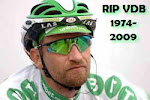
I said earlier tonight on Twitter that I thought race organizers needed to use more common sense if they wanted positive spectacle during a race like the Tour - and not to see stages finish "under yellow" (to use an F1 phrase), while GC hopefuls like Christian Vande Velde were forced out of the race after crashing in treacherous conditions.

I did not, however, say that today's route was too dangerous for the Tour or that tomorrow's cobbles have no place in a three-week stage race.

Rather, I think that the routes the organizers choose should not be so possibly extreme (in the case of inclement weather, for example) that riders lose the ability to appropriately manage risk. A course that's absolutely fine for a one-day Classic like Liege-Bastogne-Liege might be unsuited for inclusion in the Tour, if there is a radical increase in the likelihood of a rider's being injured and having to abandon the race because of a crash that's likely to occur regardless of his intent, because of factors outside his control - like if it rains a lot, for example.

Sure, sending the riders over the cobbles of Paris-Roubaix tomorrow could create a true spectacle - but what happens if Contador crashes while riding in the front, seemingly out of danger, and shatters his knee and has to abandon the race? Who benefits from that outcome? And why wouldn't the organizers expect that to happen, given that it was the fate that befell Johan Museeuw during the 1998 Hell of the North?

Risk Management - that's the operative idea. But it becomes very difficult to put into practice when the Tour de France is turned upside down and skinny Basque climbers are forced to ride the cobbles of Paris-Roubaix just to get to the mountains in which they normally shine.

Classics riders have the entire Spring season to ply their trade. The Grand Tour contenders leave them alone to get on with it - so why should those same riders be forced into conditions that aren't traditionally part of a three-week tour? I'm all for changing things up and keeping the racing exciting, but don't make it a situation where the rider loses the ability to manage his appetite for risk without forfeiting the chance to contend for the overall.

UPDATE: As the AP notes:

"...Perhaps just a short stretch or two of cobbles would have been sufficient. Instead, on Tuesday’s stage 3, the 193 riders will bump, rattle and roll over seven separate sections, 8 miles in all of cobbles that at times will feel more like riding on the rocky bed of dry river than on a road...But it would be best if the cobbles don’t skew the Tour outcome too much and the top contenders make it through safely. It would not be convincing if Armstrong or others win simply because the paving stones hobbled their rivals.

If the crashes occurred primarily as a result of oil on the road and not the nature of the descent, as I originally thought to be the case, then I can support the notion of waiting to regroup, but wonder why Thor and the other sprinters weren't allowed to contest the finish? It's not like the organizers themselves poured oil on the road...(that would be some effed-up sh*t if they did). Still though, it's important that organizers balance the need to create spectacle with the health and safety of the riders, and that they not ask them to take risks that could have far-reaching negative economic, psychological and physical consequences (beyond the norm) were something to go wrong - as it seemed to today. And if the organizers are being dicks, then more power to the riders for pushing back and refusing to be the greyhound dogs that are driven into the ground for the amusement of the masses. Hell, you think doping happens in a vacuum? No one ever wants to speak of the racer organizers' culpability for doping - yet they're the assassins who plan the routes and schedule the transfers and demand that the riders repeatedly perform super-human feats of strength and endurance - and never will they sacrifice the spectacle for the safety of the athletes.

I doubt that a riders' union would ever work in cycling, which is too global a sport and too flush with raw talent from the socioeconomic badlands to nurture the solidarity necessary for the implementation and growth of a union, so if justified, today's meek protest by the riders was almost as enjoyable a sight as a field-sprint would have been.

UPDATE2: I thought the furor over motodoping was funny. Now it's a f^cking royal pain-in-the-ass. I CANNOT believe that the UCI will take such an incredibly draconian stance towards a non-existent problem (motodoping, which is more a gag than a real threat - sorry for ripping on you before, Canc'.) while at the same time they'll accept hush money to allow Armstrong to continue competing even though he'd failed several doping controls. Check it (courtesy of CyclingNews.com):

"Garmin-Transitions team manager Jonathan Vaughters agreed. "The cobblestones make the race interesting, they add an element to it," he told Cyclingnews. "They're a hurdle you have to overcome in the race, just like the rain or the crosswinds or the mountains."

But recent suspicion concerning hidden motors in bicycles made the International Cycling Union (UCI) add another difficulty in the already torturous stage. In the race finale, teams would normally have posted their assistants with spare bikes at the roadside to provide for quick bike changes if their leaders suffer a mechanical. This is what is usually done in Paris-Roubaix, but to exclude any possibility of electrical treachery, complete bike changes are now possible only from team cars.

"I don't like that decision," Vaughters said. "If someone breaks a bike, and the cars are two kilometres behind... Normally, we would have a person with a bike at every cobblestone sector, just waiting there. But now, the bike has to come off the roof of a team car."

In order to maintain everybody's chances, the race organiser has decided to determine specific zones of technical assistance after the last four cobbled sections, where teams will be allowed to provide spare wheels and other mechanical help.

Still, Vaughters thought that other alternatives existed. "You put a box on the side of the cobbles [for frame scanning - ed.], put a tag on them and then they're ready. I know that logistically, that's very difficult to do. But it would be better than just banning bike changes.

"It's just going to be a crazy day anyway,” he added. “For sure, there'll be a couple of GC contenders that are going to be eliminated from the race. And it is also very likely that riders will be eliminated because of a bike difficulty and being unable to change. And I don't think that is in the interest of fair play, either."

Monday, May 10, 2010

Regarding the Opening Stages of the Giro d'Italia

While Christian Vande Velde can't possibly have anything good to say about the opening road stages of the Giro, having crashed-out of the beautiful Italian Grand Tour on the same day for the second year running (stage 3, this time), and we lament his forced-abandonment ("crabandonment"?) the more sophisticated cycling fans are savoring two days of road racing in Holland that saw game-changing racing in week one of a GT.

No one likes to see riders like CVV abandon because of injuries sustained in a crash, but watching Brad Wiggins be all but eliminated from the GC when he couldn't get back to the first echelon, just as overnight leader Cadel Evans lost the leader's jersey because he, too, missed the split and was left isolated, without a single BMC teammate to help him chase...this was fiercely beautiful racing that evoked memories of the Merckx-era, when anyone with aspirations of winning a GT was expected to fight for supremacy from the first kilometers of the race if the conditions demanded it. Francois the Postman, a contributor to the CyclingNews.com forum, explained it best after today's stage (3) and we quote him here:

"Normally I am sorta lukewarm about the opening stages, but this was great viewing, and we certainly are hitting Italy with an almost perfect set-up for fireworks.

It's a shame some folk got really hurt on the road, but I totally disagree with the Eurosport commentators. To me the last two days highlighted what I really dislike in most stage races, that they are taking all risks out of racing by sticking to wide roads and perfect run-ins. Always felt they were neutering something that I think is part and parcel of a GT: endurance, trial, challenge.

Knowing that the end run ins are following the usual pattern, and cruising on great roads to it, it just breeds that calculated let's have an escape group dangling out there and then reel them comfortably in when it's "that time". A flat stage style that I hate, but have been forced to endure far far too often. Here, that really doesn't work as a race approach.

The only thing that would have worked, as pointed out, is to make the race on Dutch roads hard from the get-go, to make that big group smaller, and thus the road less risky. I know we have a long 3 weeks ahead of us. So what? Isn't it the point that no stage should be "comfortable, controllable and predictable? We got waaay to used to "the normal way" a 3 week GT rolls out. The last 2 days showed that that doesn't need to be the way. You don't even need tome bonuses to create interesting gaps artificially.

Everyone knew yard by yard where they would be racing. If they were so keen their main man really safe, teams were simply not deploying the right attack attitude: make the race a lot harder. They chose not to. And reaped the rewards for that attitude: Dutch lottery.

But why should only mountain stages run folk into the red in the last week and a bit?

It proved to me that the current crop of GT specialists, riders and directors, can learn a trick or two from the classic folk too: how to race here. We have started to specialize over the last decade and a bit. Well, please let that era come to end quickly if the stages can be this entertaining from the start.

As a group, they were bloody nervous, out of their comfort zone, and, ironically, too careful. And that was responsible for more crashes than anything the road threw at them.

And the main riders who actually have more all-round skills knew it. Even after yesterday's crash fest, the only thing I got from most interviews by the big names was that the nervousness was fingered more than the actual route taken.

So, to my delight, 2 great telly days. And we are having some great gaps, after the first 2 proper stages. And all we crossed was a pancake. Wow.

Glad they brought the Tour here too. Could keep me more awake than usual during the first days."


For Pappillon, the real treat is to see Vino in pink! We can't wait for Wednesday's TTT!

Tuesday, April 27, 2010

From the Archives: 1988 Worlds

According to a poster to the Cyclingnews.com forum: "For me, the finish of the 1988 Worlds springs to mind. It looked like cheating but it probably wasn't. A lot of people thought - at least at first - that Bauer had run Criquielion into the barrier deliberately. But then you only had to watch the way Bauer's whole thang collapsed to let Fondriest almost freewheel past to realise it was probably unintentional. It could have been a Hand of God moment but instead it was actually more like a 'I did not have sexual relations with that woman' moment."

Friday, April 16, 2010

VICIOUS! Keough Caught on Video Crashing Bahati!

VICIOUS! From the video I watched (shown below), it is obvious that UnitedHealthcare-Maxxis sprinter Jake Keough intentionally crashed Rahsaan Bahati (Bahati Foundation) during the Dana Point Grand Prix criterium this past Sunday. Just look at the photo below in which Keough is caught for all the world to see SHAMEFULLY deviating from his line and turning his upper body (to be followed by his bike) roughly 45 DEGREES into his African-American rival.
 

Some have argued (without merit) that, because the race was overly-aggressive, (and apparently, Keough not able to defend position through speed or skill), the stymied sprinter from UnitedHealthcare was within his rights when he toppled the tall rider who, as a youth, had escaped from the gang-infested L.A. ghetto to become a champion professional cyclist (aka: a PRO).

What happened 15 laps prior to Keough's vicious swerve into Bahati is immaterial when it comes to assigning blame for the incident in question. Bahati was trying to move onto the wheel that Keough was following before the sprint, because he intended to win the race and dedicate it to his Latino teammate Jorge Alvarado, who died the day before when he was hit by a car being driven in an illegal street race.  Granted, what Bahati wanted was the spot behind Keough's own teammate's wheel, but is that not the nature of field sprinting? A fierce but clean battle for position, followed by an explosive stampede towards the line!

It would seem that Keough lacked something besides common sense that day - perhaps strength, or bike-handling skills - because he couldn't defend his position and at some point would have had to have ceded it to Bahati. But instead of doing the Pro thing and surrendering the position he could no longer defend, Keough, like a desperate little despot, knowing the war was lost but hell-bent on destroying everything he and his teammates and their supporters worked to build...Keough crashed his rival and marred the conclusion of the race!!! Even if "Bahati was going all unnecessarily aggro to get in the UHC train," (to quote a random forum poster) that still doesn't give Keough the right to knock down Bahati, or any other rider for that matter - because as we see, many other riders - innocent and undeserving of their fate, just like Bahati - were made to painfully suffer because of Keough's irresponsible, vicious, hateful move.

So UN-PRO.


The alternate video (taken from beyond the S/F looking AT the last turn), which is embedded in the VeloNews web-article on the incident, is inconclusive and should not be relied upon for determining the cause of the crash. The ICTV feed highlighted in the article, but unknown to the masses until now, tells a different, more somber story: a vicious thug savagely attacks a respected professional who happens to be an African-American leader in his community, and knocks him to the ground along with nearly a dozen other innocents, in a high-speed bike crash during the Dana Point GP Criterium.

Previous video thanks to Inside Cycling TV.